Eight Politicians Whose Appearance Has Changed Dramatically Over the Years (4 of 5)
Advertisement
Joe Biden
The 46th president’s transformation is no doubt the most jarring example of the effects of aging. When he won his first U.S. Senate election in November 1972, he was technically too young to actually hold the position (he was 29, although by the time he was sworn in two months later he had turned 30). When watching footage of him at senate hearings while in his early 30s, he comes across as a fighter, full of energy and emotion. Even when he became vice president in 2009, at age 66, he had the vigor of a man a decade younger. But by the time Biden entered the White House at 78, becoming the oldest president in American history in the process, his mental decline and lack of stamina were already becoming apparent no matter how many bicycle rides he took to “prove” his physical health. His performance during the June 2024 debate was the last straw, and he ended his reelection campaign the following month.
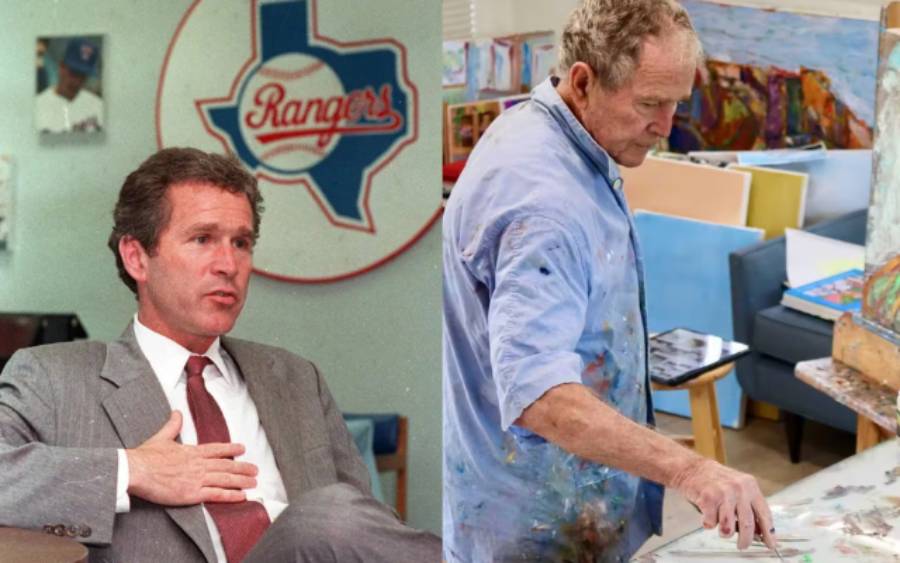
George W. Bush
George W. Bush entered the White House at 54 with a relatively youthful, energetic appearance. If you wanted to describe him as a middle-aged frat boy, you’d get no argument out of most people. His dark hair, broad smile and distinctly Texas-influenced style (never mind that he was born and raised in Connecticut) became instantly recognizable after the 2000 election.
Today, Bush is 80, and photographs naturally show the effects of two decades of aging. His hair is now predominantly gray, and his face has become noticeably more weathered. But nonetheless, he’s still keeping it together better than the average octogenarian. Given that both his parents (41st president George H. W. Bush and First Lady Barbara Bush) lived well into their 90s, this isn’t a surprise. He’s just living his best post-presidency life by painting, engaging in philanthropy and making occasional public appearances but steering clear of the combative environment that defined his political career.
