Cystic Acne: What is it, Symptoms, Treatment and Prevention
Advertisement
Cystic acne is unfortunately one of the worst types of acne you can suffer from. Standard acne might manifest itself in the form of a surface-level pimple, something generally regarded as nothing more than a minor nuisance. Cystic acne, on the other hand, develops deep beneath the skin and can result in large, painful, pus-filled bumps that remain for weeks. They can even leave behind permanent scars.
Over-the-counter creams and ointments alone aren’t effective in treating cystic acne. For this reason, it is important to see a dermatologist if you experience persistent or severe breakouts. The earlier you treat cystic acne the better since it can soothe the pain, reduce the breakout period, and prevent permanent scarring.
What is Cystic Acne and What Causes it?
Cystic acne is an extremely painful type of acne that develops after a pore becomes blocked. The process isn’t different from other forms of acne, but the difference is that excess oil and dead skin cells accumulate inside the pore, resulting in a situation where bacteria becomes trapped. This inflammatory response creates swelling deep within the skin. As the inflammation increases, painful red lumps develop.
Hormones are a major cause of cystic acne, which is why teens often get it, but older adults can too during hormonal changes. Drastic hormonal swings can increase oil production, increasing the likelihood of clogged pores.
Genetics, in particular family history, also factors into who is more likely to develop cystic breakouts. Psychological stress itself doesn’t cause cystic acne, but it can make acne flare-ups worse.
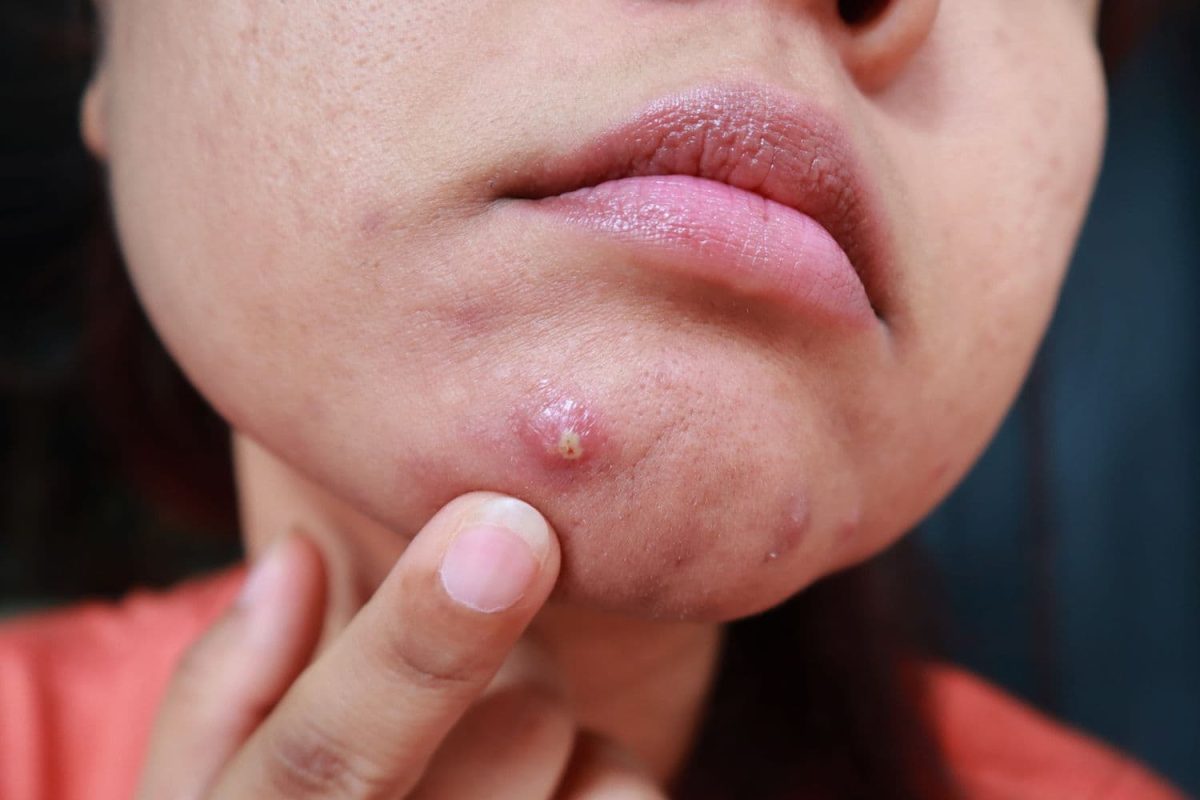 Cystic Acne: What is it, Symptoms, Treatment and Prevention
