A Burn Mark on a Tortilla Changed Their Lives Forever
Advertisement
Las Cruces, New Mexico, is the kind of town where the desert sky seems to stretch time itself — where dusk lingers, golden and stubborn, as if it doesn’t want to let go. It’s a place built on small rituals: Sunday dinners, handwritten recipes, stories told so often they feel stitched into the walls.
For Maria Alvarez, though, that warm desert light had started to dim. The years of trying for a baby hadn’t exploded her marriage — they’d eroded it, slowly, almost politely. Doctor appointments ended with careful smiles and vague reassurances that felt heavier than bad news. Carlos grew quieter. Not angry, just distant. Some nights he’d sit at the kitchen table, staring past her, reaching for a bottle instead of her hand.
So Maria cooked. Because cooking still made sense. The sharp hiss of onions hitting a hot pan. Flour dusting her fingers like soft chalk. The smell of cumin and garlic carrying her back to her mother’s kitchen in Mexico — a place where love was loud, messy, and certain. In the rhythm of chopping and stirring, she could almost believe nothing had changed.
On one ordinary afternoon, with the radio murmuring and the smell of beans filling the house, Maria had no idea her life was about to fracture—and then mend—in a way she would never forget. What happened next would ripple beyond their modest home, drawing strangers at dawn, reigniting a marriage on the brink, and giving new meaning to a simple food Americans often take for granted. It started with lunch. It ended with hope. And it all unfolded on a cast-iron skillet in the high desert.
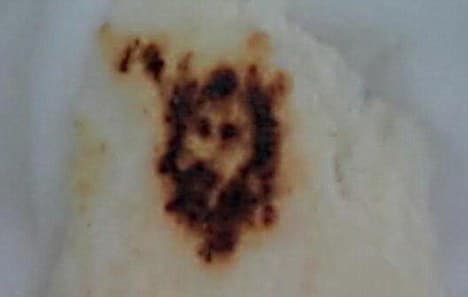 A Burn Mark on a Tortilla Changed Their Lives Forever