What Began as a Wall Stain Became a Shrine: The Chicago Miracle Officials Still Can’t Explain (3 of 4)
Advertisement
Not everyone was charmed. The backlash arrived quickly and viciously. Someone scrawled “The Big Lie” across the image in shoe polish. Others added cartoonish features, mocking eyes and crooked smiles meant to drain the wall of any holiness. One morning, a crudely drawn devil’s face appeared alongside the number 666, dripping in red paint. Yet every time the wall was defaced, the community responded. Neighbors arrived before sunrise with buckets and rags, scrubbing the concrete clean in near silence. Someone poured a modest slab of concrete and declared it an altar. Rosaries appeared, looped carefully through chain-link fencing. Above it all, traffic continued uninterrupted, indifferent and relentless.
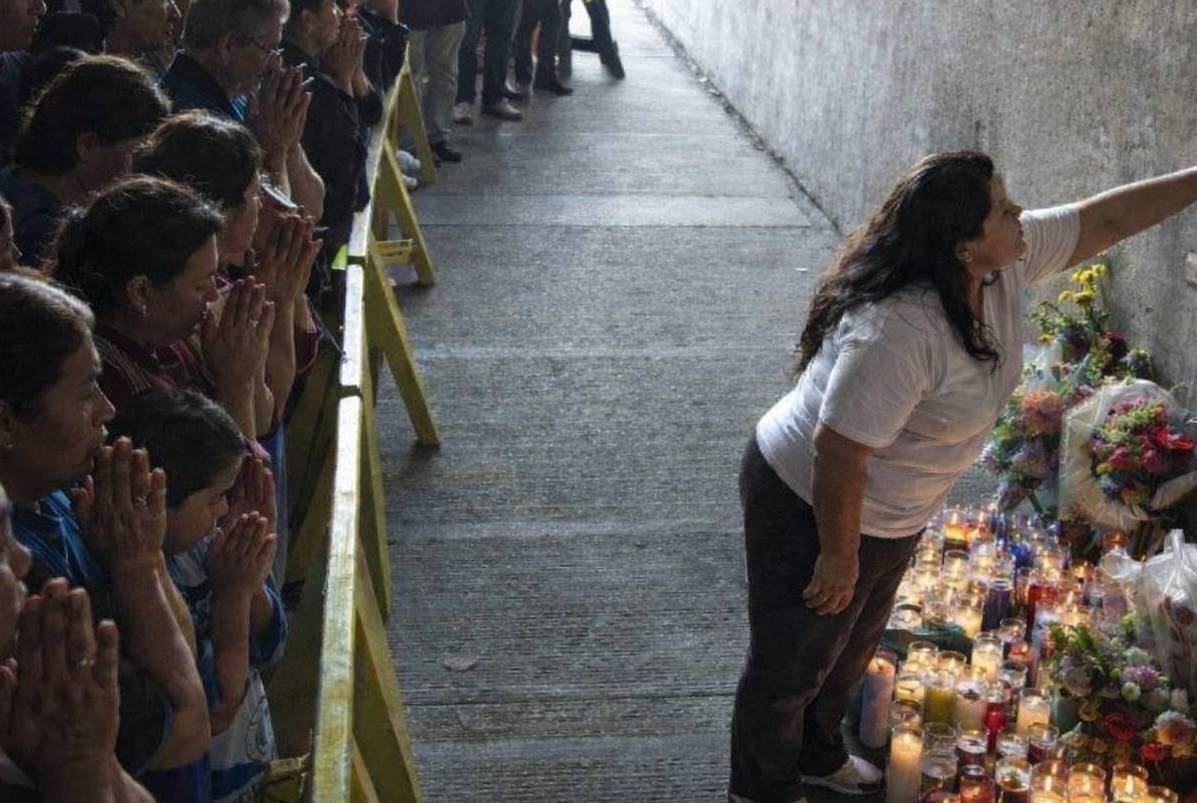
For Delgado, the meaning of the image was never confined to the wall itself. Its impact unfolded slowly, unevenly, the way real life does. Her child survived those terrifying early years and eventually grew into adulthood. Today, he is 25, healthy enough to chase plans of his own. Her marriage did not survive, despite her prayers, but time eventually made room for another love—quieter, steadier, and kinder. She passed her culinary exams and spent years working in restaurants before choosing a calmer path as a bank teller. Peace, she says, didn’t arrive in a flash. It slipped in gradually, almost unnoticed, until one day she realized it had stayed.
As years passed, the crowds dwindled. Flowers withered. Candles burned down to waxy stubs. Construction crews eventually fenced off the space beneath the overpass, citing bridge repairs and public safety concerns. Officially, it was maintenance. Unofficially, it felt like an ending. The small altar disappeared. What remains now are fragments: melted candles fused to concrete, a lantern cage rattling in the wind, a paper plate stiff with hardened wax, an abandoned Taco Bell cup collecting rainwater.
