Is the Furminator Ruining Your Pet’s Coat? (2 of 4)
Advertisement
The Problem with the Furminator
The Furminator may resemble a brush, but it functions more like a blade. Its metal edge is designed to pull out loose undercoat. Conventional tools are also designed to separate and lift dead undercoat, but where the two differ is that the Furminator also catches and cuts the healthy and essential guard coat hairs. This is very problematic. Contrary to what many dog owners believe, the large pile of fur that comes out isn’t proof that the tool is working effectively. In many cases, it’s actually doing more harm than good.
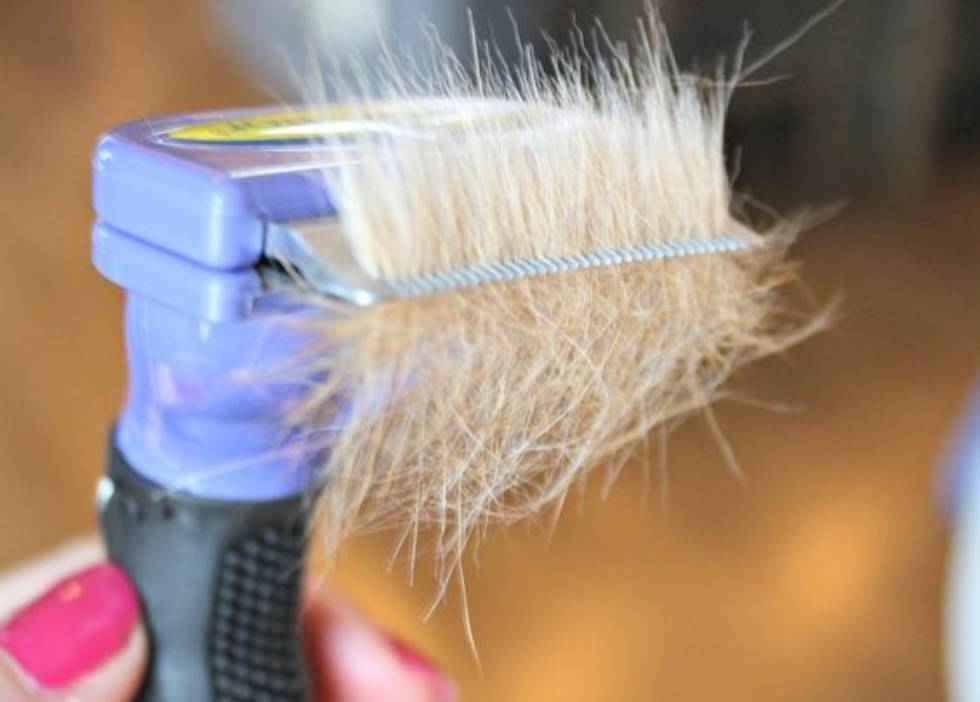
The Long-Term Damage You Can’t See
We are inclined to see our dog’s coat as a mere cosmetic feature, but it serves a highly functional purpose. Repeated damage or removal of guard hairs reduces the coat’s ability to repel water, block sunlight, and shield the skin from environmental hazards. In some cases, the coat can grow back unevenly, with the soft undercoat returning more quickly than the slower-growing guard hairs.
It’s not uncommon for dog owners to bring their Golden Retriever to a pet salon after months of Furminator use and wonder why the coat suddenly feels woolly instead of silky. Often, the undercoat has begun to dominate because the guard hairs have been repeatedly damaged. The coat’s texture is an obvious concern to the owner, but there is an underlying issue that should be even more worrying. An imbalanced coat may actually make it harder for a beloved Goldie to regulate its body temperature. Although some dogs recover fully, others experience permanent changes in texture and appearance that make it nearly impossible to stay comfortable.
