Having a good night’s rest during a heatwave can be torture. You flip the pillow, kick off the covers, and lie there all sweaty, wondering how your bedroom somehow became a sauna. Air conditioning can provide instant relief, but it may also leave the room uncomfortably cold and dry. That makes a regular electric fan seem like the perfect option.
For most people, sleeping with a fan on is fine, but you’ve got to keep a few things in mind, like where it’s pointed, how clean it is, the condition of the room, and whether you already deal with allergies, asthma, sinus trouble, or dry eyes.
How a Fan Can Help You Sleep
Temperature plays an important role in sleep. As bedtime approaches, the body naturally begins to cool down as part of its circadian rhythm. When a bedroom is too hot, the body has a harder time releasing heat. This can lead to sweating, a faster heart rate, frequent waking, and a generally miserable night.
A fan doesn’t technically cool the air. Instead, it moves air across the skin, helping sweat evaporate and making you feel cooler. That breeze may be enough to help you fall asleep faster and stay asleep longer.
Fans also produce a steady hum that works like a white noise machine. It can mask outside noises, neighbors chatting, and other sounds that might otherwise wake you. Air circulation may also keep a room from feeling stuffy and help reduce dampness that encourages mold and dust mites.
Some research also suggests that there’s a link between fan use and a lower risk of sudden infant death syndrome, possibly because it improves ventilation and reduces overheating. But that’s more like a Hail Mary, rather than a medical fact.
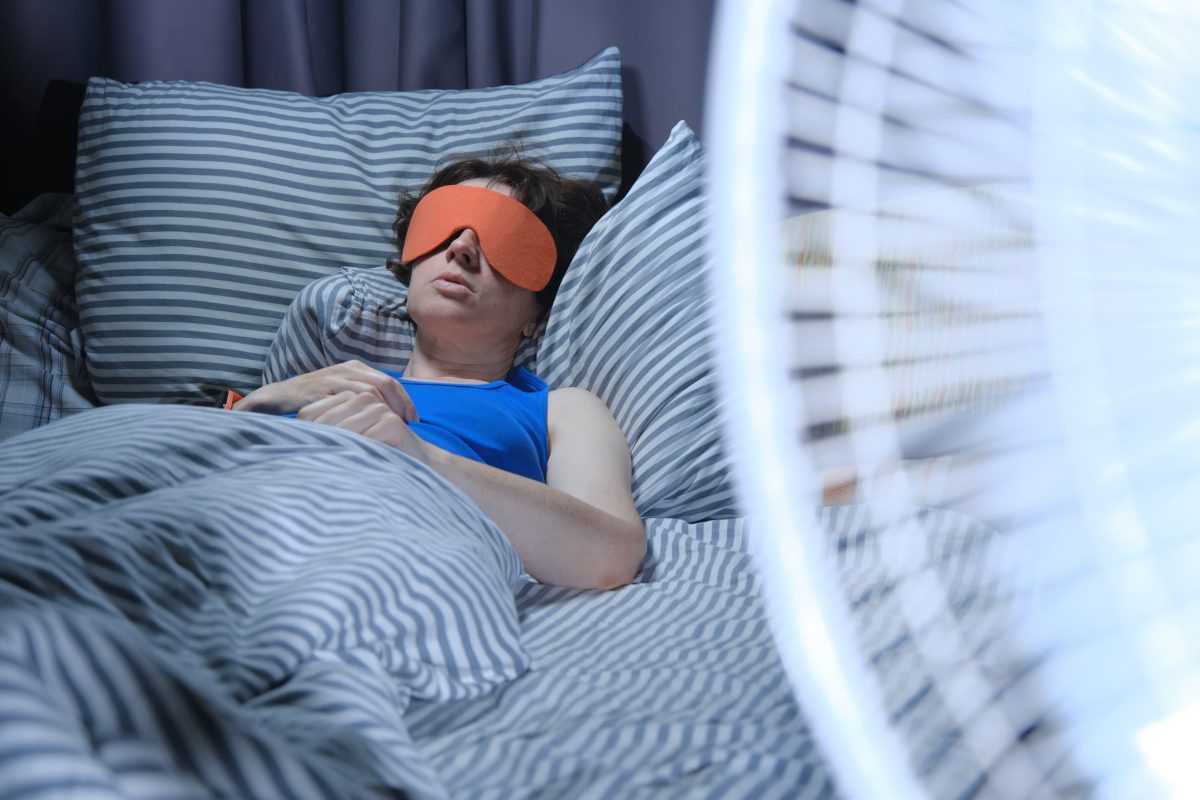 Is Sleeping With a Fan On a Good Idea?
